Diving, distance, and the taste of home: a life built between two countries.
At 28, Daniele carried a dream he didn’t yet know how to approach. His studies hadn’t gone the way he’d imagined, but that never defined him; he was simply waiting for the right moment to start over. He worked at McDonald’s, saved, and dreamed, until one day someone asked him a deceptively simple question: “why don’t you do it?” He realised that every obstacle in his way had really just been an excuse. He spent the next two years saving, learning English, and building a plan, which he printed out and pinned to his bedroom wall to look at every morning. At 30, full of courage and excitement, he set off for Odense to study International Business and Marketing. As he says today, it’s the best thing he’s ever done.
Seven years later, he’s a marketing specialist in Copenhagen, working in the niche world of rope access: the industry behind the people who abseil down office towers and offshore platforms. In his spare time, he trains with High Diving Denmark, throwing himself off platforms up to 15 metres high, chasing a sport he first fell for watching Red Bull Cliff Diving as a teenager back home. His girlfriend, Alessia, is still in Sardinia, and they’ve built a relationship that runs almost entirely on video calls and willpower. And through all of it, he still misses the taste of culurgiones he can’t find in a single Danish supermarket.
We asked Daniele about the life he’s built since then: about fear and courage, love across a distance, and the tastes of home he’s still, seven years on, searching for.
When and why did you decide to leave Sardinia and come to Denmark, to study in Odense? Was there a specific moment when you realized it was the right decision?
This first question will already make me emotional.
Despite the lack of opportunities, not many people leave Sardinia to seek their fortune abroad. I grew up in that environment, but I was always inspired by my best friend, who left the island for Erasmus during his studies.
Since I failed Engineering, I thought I wasn’t good enough to study, influenced by friends with a negative mentality that’s sadly common on the island. I never considered studying abroad as an option.
One day in 2017, when I was 28, I expressed my dream of graduating abroad to someone, who asked me a simple question: “Why don’t you do it?” I realised I couldn’t answer with a sensible reason, only excuses. In that moment, I knew I was ready to prove myself wrong.
Denmark came into the picture after that, when I started scoring the countries I was interested in on a spreadsheet across several variables. Denmark wasn’t leading on weather, but each variable had a different weight, so it didn’t matter much in the final score. Spoiler alert: I was right. The “bad” weather is negligible compared to everything else I found here.
I printed a roadmap of my plan and hung it on my bedroom wall to look at every day. Then I found a job at McDonald’s, a huge stroke of luck at the time, and started saving. It took two years to save enough money, learn English, and sort out the practicalities. I was 30 when I left my island, full of fear, completely alone, with no idea what to expect. Yet it’s been the best thing I’ve done in my life so far.
Sardinia and Odense are, to put it mildly, two completely different worlds, in climate, pace of life, mentality. What was hardest to adjust to in those first months?
Nothing was really hard for me. I was excited and motivated, and everything looked like an amazing opportunity. If I had to mention something, the two things that made my days more difficult were being far from my family and the language barrier.
Being far from my family was hard because I have an uncommonly good relationship with them, even by Italian standards. Every day I acknowledge that I’m missing parts of their lives that will never come back. It’s still sad to think about.
The language was difficult because when I got accepted, I wasn’t able to speak English properly. Since I hadn’t taken any language exams, a teacher interviewed me to make sure I could attend lectures. I prepared a ton of key concepts I was ready to fire off as soon as I spotted a related question, popping like champagne on any buzzword I recognised. I’m happy I “tricked” her. I did well at lectures, even though I went home exhausted every day because I couldn’t understand more than 50% of what the teachers said for the first two to three months. I worked my ass off, that’s for sure.
What did the transition from student life in Odense to everyday life in Copenhagen look like? What made you decide to move there after your studies?
The transition went surprisingly smoothly. When I was studying, I was always very busy with a B2B project, a student job at Arla, and diving training besides my studies. During my education, I always thought that working full-time would be better for me because I could finally focus on fewer goals, and now I can say that I was right. Having a fixed schedule and fewer objectives allows me to optimise my week. I decided to move to Copenhagen only because my current job demanded it. Despite loving Odense like no other city in the world, my current job is terrific, and I happily decided to give Copenhagen a go.

What did your professional path look like after finishing your studies in Odense? What do you do now, and has that path taken you somewhere close to what you imagined when you first started university?
I decided to study International Business and Marketing because of the broad opportunities it offered, whether I ended up starting entrepreneurial projects or working for existing companies. It gave me critical thinking and tools I could apply in any industry.
I am currently a marketing specialist for Industrial Climbing Solutions, a small company in the rope access industry, where I also take care of many other business-related tasks. The value I generate is incredibly tangible working at this scale. I imagined ending up somewhere like this, but I never imagined such a cool industry, since I didn’t even know it existed, even though I’m a wannabe climber myself. Rope access is a work method using climbing equipment and techniques to reach difficult-to-access elevated areas, like external windows of tall buildings or offshore platforms. Technicians are sometimes called “spider-men,” and although the general opinion is that it’s a risky job, the data says otherwise.
Was it hard to make friends when you first arrived? What does that process of building new friendships look like in a country where Danes, by reputation, are known to be fairly closed off to newcomers at first?
To be completely honest, making friends was not my priority. I left my whole identity in Sardinia because I had one goal: to build a better future for myself. I think I’m quite friendly, and being surrounded by international students helped a lot. I’ve never found it difficult to connect with good people. The toughest challenge was my inability to make jokes in English at the beginning, a real struggle when you can’t show people who you really are.
I’m always sorry when I read stories about internationals complaining about Danes, because my experience has been completely positive. Some of my best friends are Danish, and they’re some of the best people I’ve ever met. I think the problem usually lies with internationals and their expectations. When I moved here, I decided to adapt carefully to the cultural norms, because connecting with people takes time, especially as an adult. Some expats want locals to act like they do back home without realising they’re the ones abroad. I find that a little disrespectful. I will always stand up for Danes on this topic.
Is there anything typically Danish that you’ve fully adopted as your own, something you’d have least expected from yourself before moving here?
There are many things I learned in Denmark, like the respect for silence and calmness. Every time I go to Italy, I miss the quiet I have here. Danes are very relaxed on average: there’s no rush to go anywhere, and rarely does anyone overtake your position in a queue. Italians don’t realise that their own behaviour, the urge to drive faster, skip queues, be loud, then complain when others do the same, is what causes them so much stress.
Another thing I’ve adopted is not complaining about taxes. Danes claim to complain about paying them, but they have no idea that for some people in Italy, dodging taxes is just a lifestyle. Italians try to avoid paying by default, while Danes understand the reason for doing it, and I feel avoiding taxes just doesn’t help the community.
Food and the Tastes of Home
Sardinia has one of the most distinctive cuisines in Italy. What do you miss most from it, a dish or a flavor you simply can’t find here?
Now comes the part where you want me to cry again. I miss everything about Sardinian food. I come from an island where good food is one of life’s top priorities, and I’ve accepted that it’s hard to find elsewhere. Italians are known for their food in general, so it’s hard to name one dish; it’s a way of living. Copenhagen has excellent Michelin-starred restaurants, but outside of those, what’s left is pretty mediocre, and supermarkets have a very limited variety, which affects me most because I love to cook and eat well.
If you ever go to Sardinia, don’t miss pane guttiau, seafood fregola, culurgiones, porceddu, and sebadas.
Have you tried recreating any Sardinian dishes in your Danish kitchen? Does it work, or is there always something missing, maybe an ingredient, maybe just the atmosphere?
I can create Sardinian dishes only because every time I go back home (or somebody comes to visit me) I refill my kitchen with a few big guns. It is almost impossible to make everything from scratch if I buy groceries in Danish supermarkets (just to hide the fact that I wouldn’t have the skills anyway, even if I had the correct ingredients).
What do you think of Danish food? Is there a Danish dish you’ve fully embraced, or even come to love more than you expected?
Not really, but I go absolutely crazy for lakridskugler. I guess it counts!
Is there a food related ritual that reminds you of home, maybe a weekly call with family while everyone eats together, or a package from Sardinia full of things you can’t find here?
My sister lives in Turin, and we try to call our parents every day at dinner time, a routine I’ve kept since moving to Denmark in 2019. It’s a moment to share how our day went and keep the connection alive, and we usually spend 30 to 60 minutes together. It’s demanding sometimes, since the world is always busy, but we truly value it and try to nurture it as much as we can. Almost nobody understands our connection, but we have a lot of fun and a lot of loud laughs together. I love it!
High Diving
Diving into water from great heights seems like a sport few people choose by accident. How did you get into it, and do you remember the first jump that truly hooked you?
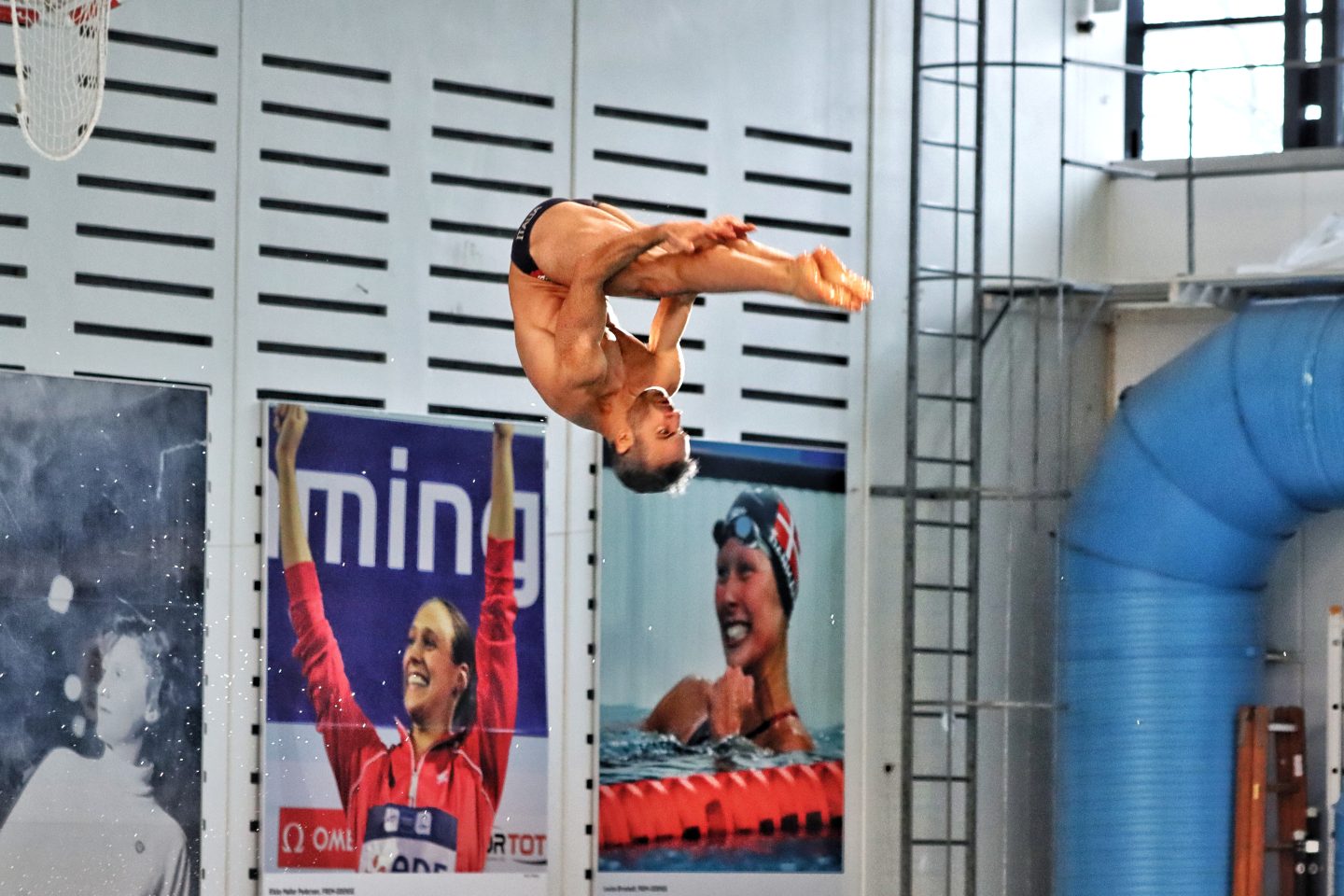
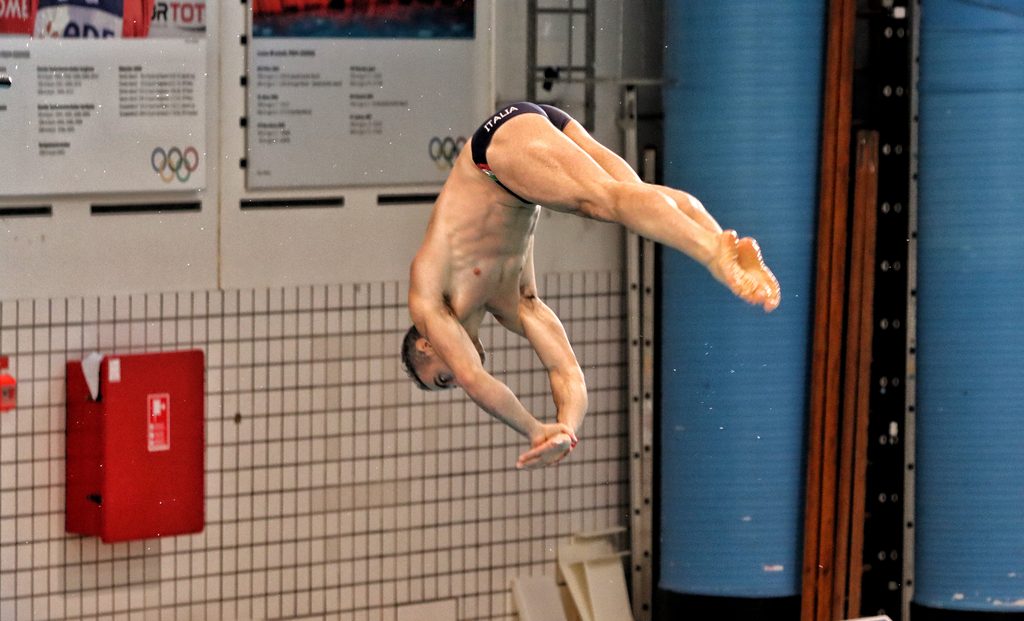
I grew up doing cliff diving with my father in Sardinia, but we never had the chance to do it properly since there are no pools with springboards or platforms there; we just repeated the same skill over and over in the same spots. Around 2011-2012, an Italian diver, Alessandro De Rose, caught my attention: he went from wildcard to winning the Red Bull Cliff Diving World Series stop in Polignano a Mare, Italy, in front of his home crowd. I still get goosebumps thinking about it, and for years I wanted to watch a competition in person. When I moved to Denmark, I discovered the tour had a stop in Copenhagen, went, and even got a picture doing a handstand with my idol. There I saw two Danish athletes, Annika Bornebusch and Jonas Madsen, who are now my friends, alongside people wearing High Diving Denmark T-shirts. I texted them on Instagram that same day, asking where they trained, since I was willing to commute from Odense to join. I nearly had a heart attack when they told me they trained in Odense. I’d been living in Denmark for three years without knowing I could chase this dream right where I lived. It sounds crazy that now I call them friends and train with them.
What goes through your mind in those few seconds of free fall, before you hit the water? Are you thinking, or is it a moment when your mind finally goes quiet?
Even if I don’t spend many seconds in the air (about 1.6 seconds from 10 metres, 1.9 from 15), my mind is anything but quiet in those moments. I usually feel a lot of pressure, especially when learning new skills. Diving is an unbelievably mindful game, and it’s hard even before you factor in the height. When I’m learning something new, my brain enters survival mode, making it very difficult to control my body; it feels like something is completely wrong and I need to get out of that situation. It takes a lot of practice to control that and focus only on what keeps me safe. Before jumping, I try to tell myself that everything is okay, that I’m capable, and I try to calm my nerves and stop shaking. Whether I’m doing something new or practising known skills, my mind has to stay focused only on the movements I make in the air. I split the jump into phases and repeat them in my mind before jumping: “Look up, gently push, aim for that angle, kick out, feel the tension in the legs, look down, hold the position, correct, pssshh.” The feeling in the air while performing the dive is unbelievable. Pure flow.
Denmark isn’t the first country that comes to mind when this sport is mentioned. Where do you even find spots high and safe enough for diving here?
Denmark does not have high cliffs, but it is fairly committed to normal diving. There are several swimming pools with springboards, and even though it’s a niche sport, I feel that there is a healthy community behind it. Thanks to High Diving Denmark, there will soon be a facility in Rudkøbing where it will be possible to jump from platforms up to 20 metres high. Currently, the only chance you have to jump from higher than 10 metres is during the Danish National Championship. Every year, we have a scaffold available for a week and we practise there for five days before the competition starts.
Does the fear ever fully go away, or is it actually part of what makes it so appealing?
The fear never goes away, and that keeps you aware of what you’re doing. It’s a potentially dangerous sport, and most people deeply respect it and avoid reckless jumps. I wouldn’t say fear is what makes it appealing, since controlling those feelings before a jump is a struggle, not a pleasure. But managing my mind is interesting and probably part of what pushes me to do it, though the main trigger is still controlling my body in the air. Jumping full power into the air, knowing you can control what happens, is something I wish more people could experience.
What’s your most memorable jump so far, whether because of the location, the height, or something that happened that day?
My most memorable jump happened in August 2025, in Sardinia, celebrating my graduation with friends and teammates from High Diving Denmark. I performed a reverse dive in pike position (302B) from a 15m cliff, the first time I’d jumped from that height, and I was absolutely terrified. Having my girlfriend, family, and teammates around helped immensely. My father and one of my coaches, Mads Søndergaard, were in the water for safety, while another coach, Kris Straarup, helped me visualise the dive and set my focus. I knew it was the perfect moment to push my limits, and letting people watch the whole process, from idea to execution, was unforgettable. Everybody was thrilled, random onlookers included, because even though I jumped with my own body, it was a team effort. Vibes are always amazing in this sport.
Love Across Two Seas
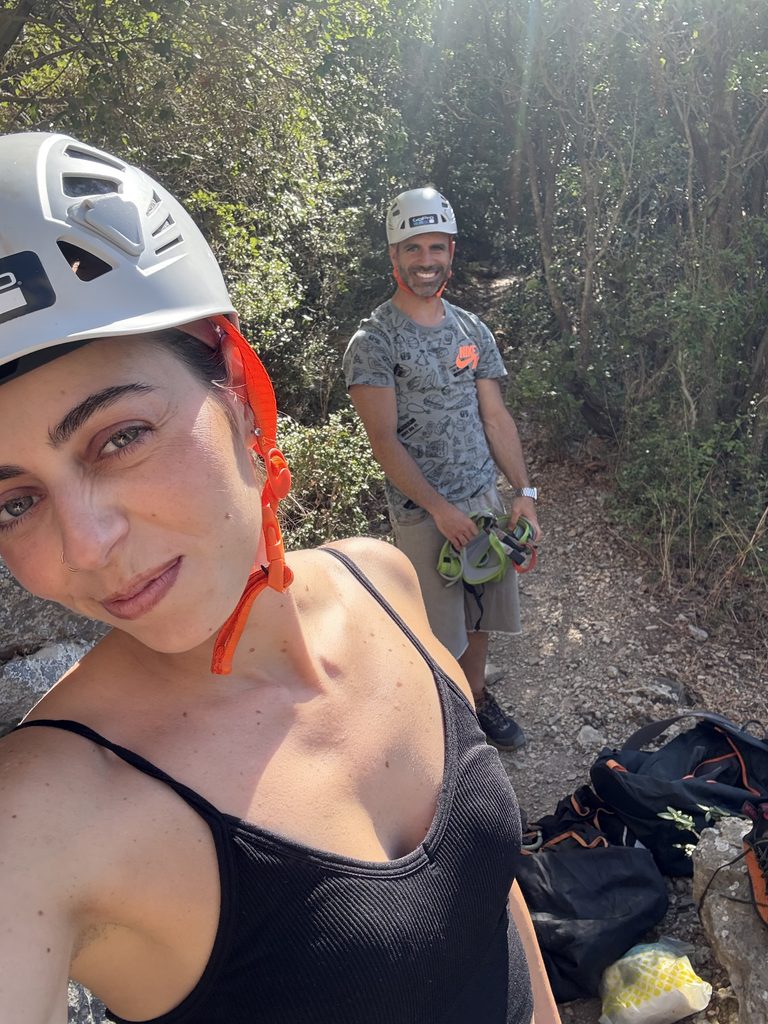
Your girlfriend still lives in Sardinia, while you’ve built your life in Denmark. How does that relationship work across so many kilometers, and such different everyday lives?
We’re quite surprised it’s working this well. We’ve been friends since 2017, so Alessia has followed my journey since day one; we were working together, at the same McDonald’s I left to move to Denmark. We knew we liked each other, and when we decided to give it a try, we were aware of what we were signing up for, even without any prior experience with long-distance relationships. I think what makes it work is the appreciation we have for each other, the fun we share, and our genuine interest in building a future together. It’s not simple. We have our highs and lows, mostly highs, but we know what we want. Willpower is one of the most powerful things in life.
Is there a ritual that keeps you two connected despite the distance, something you do regularly, no matter what?
We have a plethora of rituals. When we’re off work, we try to spend as much time as possible on video calls, but without putting our individual lives on hold; many people fear hearing too much from their partner and getting bored, but we shorten the distance by staying present in daily life instead. We keep the call open while cleaning, cooking, or doing chores, popping up now and then for a virtual kiss or to chat. It’s not a stress, but a way of sharing more. We share our calendars and always schedule time together, whether to read, watch something, train, or reflect, and staying as present as possible for each other is something that’s working very well.
Have you ever considered one of you finally moving, or have you both made peace with the idea that your life together will, at least for now, look exactly like this?
Yes, of course. We started this discussion right after we began dating, once we realised “oops, apparently we’re living in two different countries.” Long-term, it’s a major threat, and still a difficult nut to crack: we both love Sardinia and have our families there, but there aren’t enough good jobs, and we don’t want to struggle financially like the average local does. What keeps us going is that we both want to build a future together. We don’t know how or when, but we will make it happen. I pulled her into a journey she wasn’t part of, and she fully embraced it, even though it was scary, which makes me feel incredibly loved. Two people committed to staying together despite this much uncertainty and distance. Willpower is incredibly powerful.
Closing Thoughts
Putting it all together, life in Denmark, a passion for diving, a love that bridges distance, a longing for the tastes of home, does it feel like you’re living several parallel lives, or that they’re all, in some way, the same story?
Wow, that’s another great question that deeply touches me. I have no doubt they’re all part of the same story. I actively contributed to building this life; I never landed here without being aware of what was happening, always paying attention to the connections between what I was doing, like an eternal learner putting the pieces of a puzzle together. The result is that I feel incredibly rich, with a full life surrounded by amazing people. The most annoyingly sad recurring thought I have is that I can’t spend enough time with everybody. A wonderful problem to have compared to being alone, but still a problem.
Looking back at yourself from a few years ago, the guy who had just arrived in Odense, without a single friend yet, what would you tell him?
I would probably say nothing to him, so as not to interfere with the outcome. I believe that humans give their best when they struggle a bit, so I would not spoil myself by saying that I was on the right path. I do not want to spend too much time talking about how proud I am of myself, but I am very happy and proud about the choices I made in my life.
What’s next on your list, whether it’s a new diving location, a new chapter in Denmark, or something back on Sardinia?
Besides spending more time with my girlfriend and family, I have a few things on my list. On a personal level, I want to recover from a shoulder injury and clean up my dives for the next Danish National Championship of High Diving. I also want to improve my Danish: I’m ashamed I only speak it at an A1 level after seven years, with no real justification, and I need to commit to reaching at least B2. Professionally, I’m going full speed on supporting the growth of ICS. I’m incredibly passionate about the rope access industry, onshore and offshore, and I want to succeed no matter what. I feel I’m in the right position now to explore my full potential, and ICS is a wonderful place to do it.