Interview with Jovana from Serbia, a woman who turned wind into both her career and her passion
There are people who run from the wind, and people who’ve learned to live from it, and with it. Jovana belongs to the second group. For the past eight years and more, she has called Denmark home, a country that stopped seeing wind as a nuisance long ago, and started treating it as a resource, even a way of life.
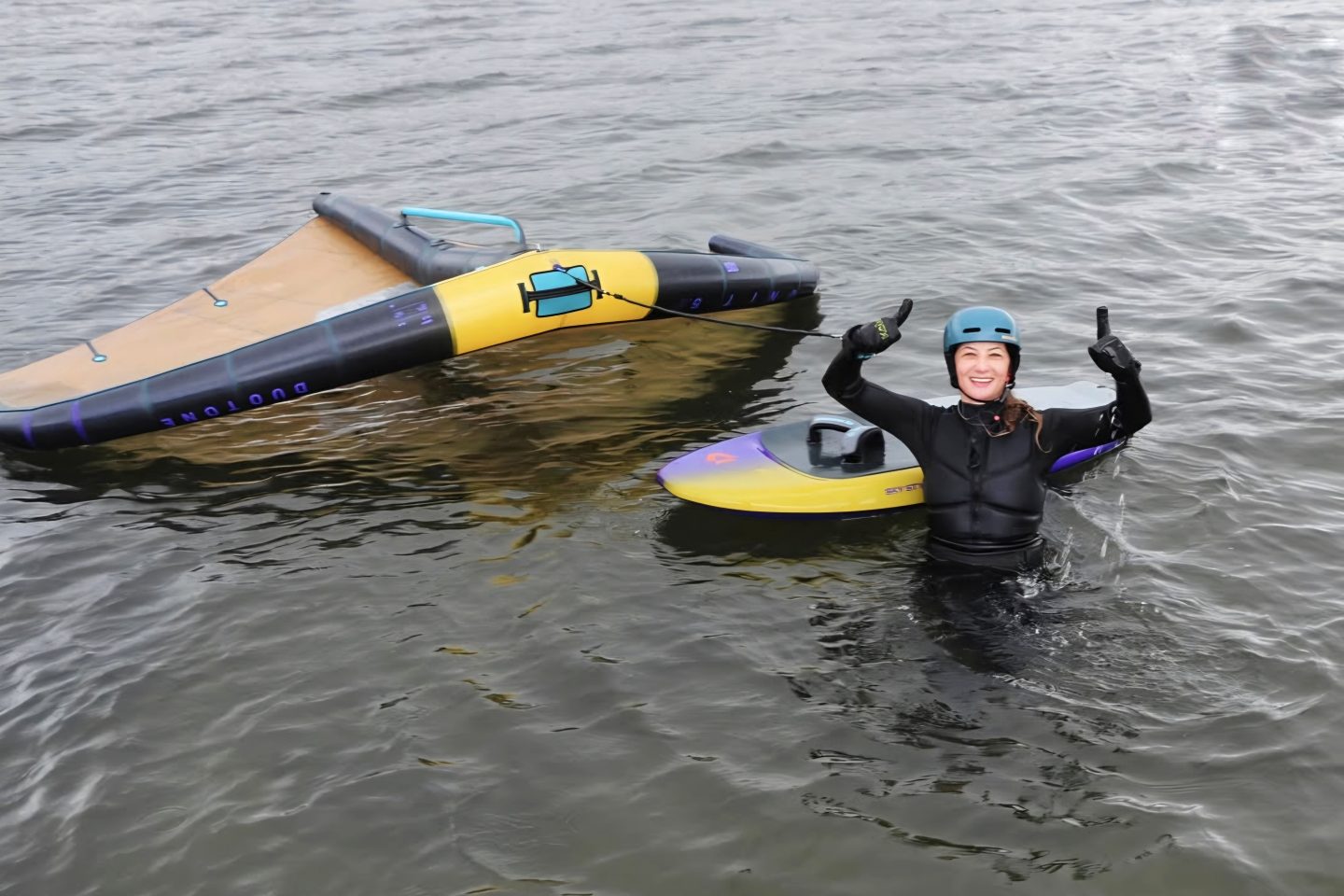
By day, Jovana works at Vattenfall, one of the companies driving Denmark’s wind energy industry, the sector that makes this small Scandinavian country one of the world’s leaders in renewable energy. Then, once work is done, that same wind takes her out onto the water, onto a wingfoil board, where there are no offices, no spreadsheets, no meetings, just her, the wind, and the horizon.
Her story is, at its core, a story about wind blowing on both sides of life: professionally and personally, seriously and freely. We talked to her about moving to Denmark, what it’s like working in an industry that’s literally powering the future of energy, and why she chose a sport where you quite literally stand on the edge between water and sky.
Life in Denmark
When and why did you move to Denmark, and could you have imagined back then that you’d still be here a decade later?
I moved in March 2018, after getting a job offer I’d applied for almost experimentally, mostly for the international experience. It just so happened that the position was in Denmark. After a difficult decision, I moved with the idea that I’d either go back to Serbia or move somewhere else after a year.
I still keep a calendar my sister gave me as an emotional goodbye gift, with a message about sisterly love for every day of the year. I’ve now read through every message in that calendar almost nine times, and we only see each other when I visit Serbia or she visits Denmark.
What was hardest to get used to when you first arrived, and what do you consider the biggest advantage of living here today?
It was really hard to get used to life in a small town, and to the fact that shops close at 5:30pm on weekdays, and many don’t even open on weekends.
I still miss street life and restaurants, but I see it as an advantage that shops don’t run non-stop, because it leaves room for more valuable things than shopping, like time with family and friends, and time spent in nature. Another huge advantage is the famous Scandinavian work-life balance, which Danes value incredibly. I’m still learning from them.
Is there anything typically Danish that you’ve fully adopted as your own, a habit, a value, or a way of thinking?
Better planning of activities and get-togethers. Even though a lot of foreigners in Denmark struggle with this, that lack of spontaneity actually relaxes me. It helps me enjoy the days when I have nothing scheduled at all.
What do you think Serbia is missing compared to Denmark, and the other way around?
Serbia is missing Danish positivity, order, and economic and political stability. Denmark, on the other hand, is missing a bit of Serbian temperament and unpredictability, which is necessary to some degree to feel inspired and alive.
What does a typical day look like for you, from work to the water?
My alarm usually goes off around 06.30am on weekdays. While I’m still in bed, I check the wind forecast first, then my work calendar for the day. Depending on how much work and how many online meetings I have, I decide whether to work from the office or from home. I often work from home, since I’m more productive, especially when my calendar is packed with online meetings.
When it’s windy, I don’t hesitate, I put on my wetsuit and jump into the fjord after my last meeting, to do the thing that fulfills me and makes me feel alive. Wingfoiling, the best sport in the world. On weekends, if nothing’s planned, my partner and I just go wherever the wind takes us.
A Career in the Wind Industry
How did you end up working in the wind energy sector? Was it planned, or more of a coincidence?
Mostly planned, but partly a coincidence too. After finishing my postgraduate studies in environmental engineering at FTN in Novi Sad, Serbia, I already knew I wanted to work in renewable energy, even though my first job back in Serbia was actually in manufacturing equipment for thermal power plants. I think that early experience with “dirty” energy sources is what pushed me closer to wind in the first place.
I actively looked for a new job and started as an administrative assistant at General Electric, in the regional office for Southeast Europe. Over time, I moved closer and closer to wind energy through Market and Business Development roles, until I officially transitioned into offshore wind, along with a new job and a move to Denmark.
What exactly do you do at Vattenfall, and what fulfills you most about the job?
Since joining Vattenfall in January 2022, I’ve moved through a few different roles, since I was eager to keep learning and growing. I started as an Asset Manager for operational wind farms in Denmark, then moved into roles related to developing new projects, and eventually found my way to Warranty and Commercial Management, which is what I do now.
What fulfills me most is the sense of purpose and belonging. Every day I wake up wanting to contribute to a cleaner, brighter future for the planet, with the added feeling that I’m not alone in that effort, that I belong to a group of people who share the same drive. That’s priceless.
Denmark is one of the world’s leaders in wind energy. What does that actually look like from the inside, from someone who really works in the industry?
There are ups and downs, but it’s mostly incredibly rewarding. Offshore wind is still a developing industry, which brings both challenges and advantages. The challenge is standardizing processes, equipment, and logistics to make the industry more competitive. A lack of standardization sometimes means projects aren’t profitable, despite everyone’s best efforts. But that’s also the industry’s advantage, because creativity and new ideas are genuinely valued, and with the right talent and drive, the possibilities are endless.
Are there moments when you feel proud to be part of something that’s literally changing how the world gets its energy?
Try it, join in, I guarantee you’ll enjoy it and find real opportunities to grow. Despite traditional beliefs that link energy work with “male” jobs, this industry genuinely needs women, for their versatility, expertise, empathy, and strong sense of responsibility.
Vattenfall is a company run by women, from the CEO, through directors across various departments, all the way to middle management. My manager is a woman, and her manager is a woman too. That’s incredible. I don’t know if that’s the reason, but I feel like their well-known Care culture was built by women.
I’ve genuinely enjoyed my entire journey through wind energy, and I’ve never once felt uncomfortable as a woman in a “man’s world.”
Wingfoiling, and Wind as a Way of Life
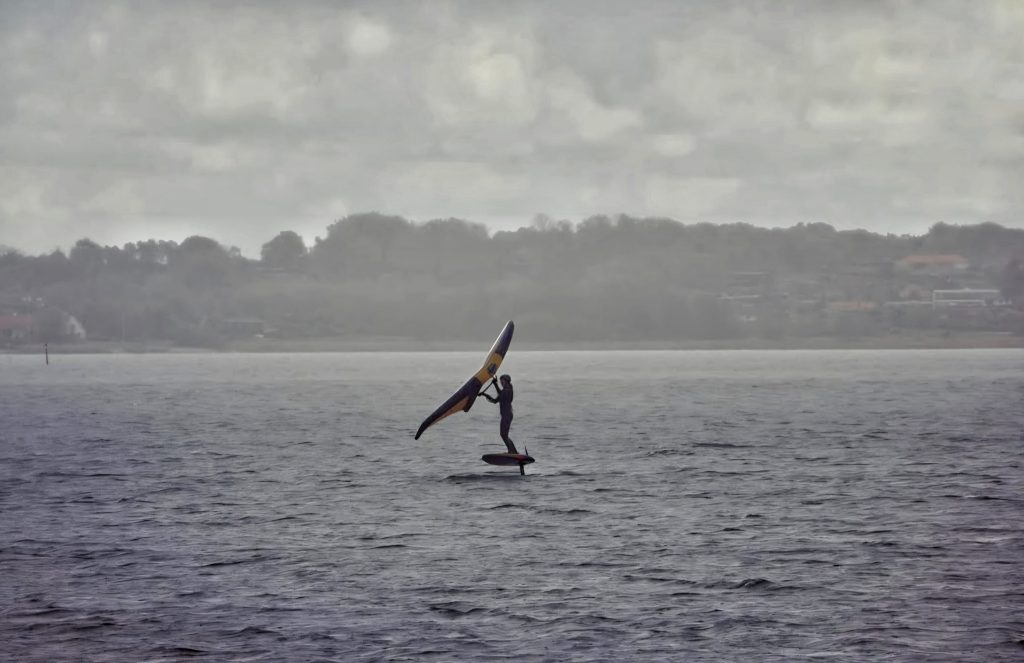
How did you discover wingfoiling, and what hooked you instantly about the sport?
For as far back as I can remember, I’ve always loved the water. I learned to swim early, and during summer breaks I could spend hours diving and swimming out into deeper water (which was strictly forbidden, if you ask my mother). Since I spent most of my life in a landlocked country, I didn’t always get the chance to fully enjoy salt water. That changed once I moved to Denmark, which has around 7,500 kilometers of coastline.
I first experienced adrenaline water sports on Denmark’s west coast, where I tried wave surfing in the North Sea for the first time. It was love at first sight. Terrifying, and incredibly hard to learn, but it makes you feel awake and present with every second spent on the waves. Later, once I moved to the east coast, where the Baltic Sea doesn’t have the right waves for surfing, I decided to try wingfoiling. It was my second, and final, love at first sight. That weightless feeling, like you’re floating above the water, in direct contact with the wind, the sea, and the sun, that’s my definition of freedom and happiness.
Is there any connection between how you think about wind at work, and how you experience it on the water?
I wouldn’t say there is. If anything, when I’m on the water, I want to forget about work entirely, which also means trying not to think too much about the laws of aerodynamics, and instead just surrendering to the wind and reading it intuitively, not scientifically.
What’s your most beautiful or intense moment on the board so far?
I go back and forth between the moment I was flying over the turquoise Aegean Sea in Prasonisi, Rhodes, and a moment closer to home in Denmark, when I ran into a family of dolphins on the Kolding fjord, swimming gracefully just a few meters away from me. Even though the Danish fjords can’t compare to that Greek blue, I still choose the encounter with the dolphins as the more precious of the two experiences.
Is Denmark, with its coastline and winds, an ideal place for this sport, or have you thought about traveling elsewhere for foiling too?
What’s amazing about this sport is how accessible it is in my everyday life. It’s become part of my identity, and I’d find it really hard to imagine life without it. The Danish fjord is a two-minute drive from home, so I can be spontaneous whenever it’s windy. That said, during fall and winter, my partner (who’s into kitesurfing) and I often travel somewhere warmer, like Greece or Spain, and continue our adventures on the water there.
What would you tell someone who’s never tried wingfoiling but is thinking about starting?
Try it, it’ll change your life! I often say I’m grateful to this sport for keeping me mentally healthy despite everything else going on. It works like a natural detox.
After two years in the sport, I got the chance to give back to my local club by teaching beginners. I’ve watched people who were thrilled just to try it, getting more and more excited with every small bit of progress, until, just like me, they fell in love with the sport the moment they had their first “flight” above the water. Kolding Windsurfing club is a great place to take your first lessons, all the way to that first flight. Who knows, maybe I’ll even be your instructor.
Wind on Both Sides
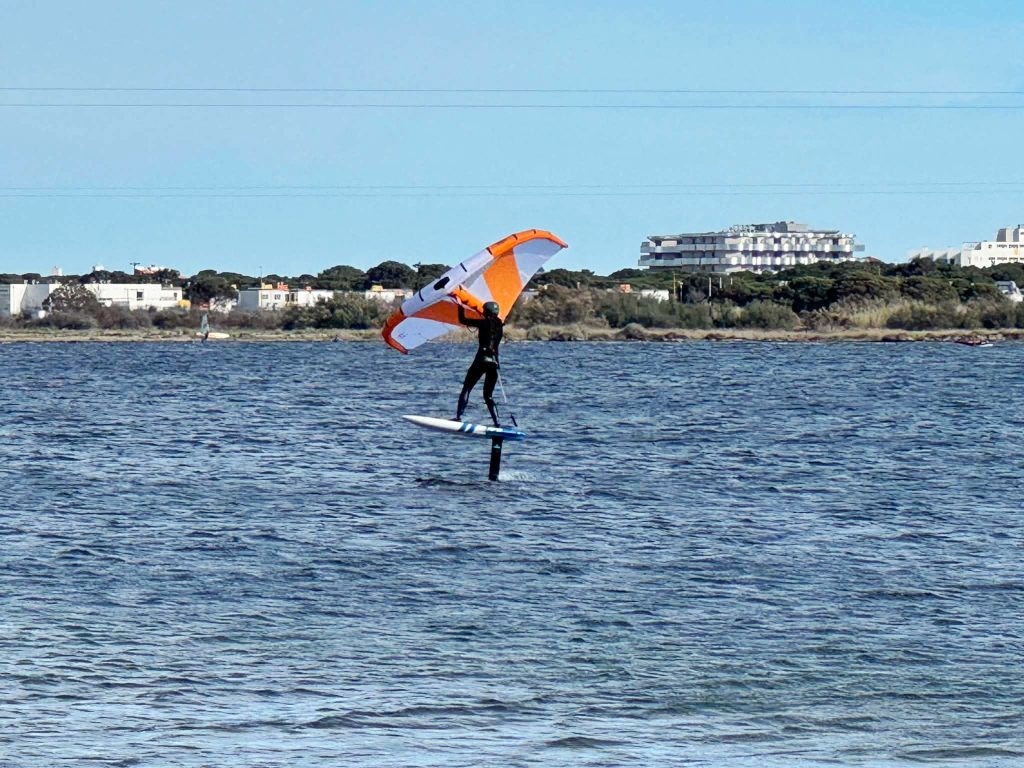
When you say the wind “blows on both sides” of your life, at work and in your free time, what does that actually mean day to day?
It means I try to organize my life every day so there’s room for both my career and my family and friends (in Serbia and in Denmark), but also for myself, and for activities like wingfoiling, which help me keep both my outer and inner balance.
Looking back on all these years in Denmark, what would you tell yourself from a decade ago?
Grab every chance boldly, without too much hesitation. No matter how painful it might be, as long as you have your health, you always have a choice, and new experiences outside your comfort zone only make you richer and stronger.
What’s next on your wish list, whether professionally or on the water?
Since I recently moved into a new position, I’m hoping to find my footing there and settle in for a while, for as long as I feel like I’m growing and learning. As for the water, a couple of new tricks, like tacks and race jibes, and of course, some nice warm destination for fall or winter.